Radochowska Cave is one of the most magnificent and mysterious places on the map of Kłodzko Land– an underground temple, where nature sculpted a work of art in stone for millions of years, and Paleolithic man left traces of his existence in unique magical rituals. Formed in the Pliocene era, about 5 to 1.6 million years ago, this fascinating cave is one of the largest and best-known speleological attractions in the entire Sudetes. Its tourist history dates back to the 18th century, when the first brave visitors came here from nearby Lądek-Zdrój, seeking adventure and secrets hidden underground. Today, Radochowska Cave is a place where the past meets the present, where every stone tells stories from millions of years ago, and every walk through the dark corridors is an unforgettable adventure into the abyss of time.
Genesis of the Cave – Millions of Years of Creation
Radochowska Cave was formed as a result of complex geological processes taking place over millions of years. In the area of the Golden Mountains, in the deep layers of limestone lying in the ancient Permian-Carboniferous seas, natural dissolution and erosion processes began work that lasted continuously. Water, naturally containing carbonic acid (CO₂), slowly dissolved limestone (CaCO₃) through chemical transformation: limestone turned into soluble calcium bicarbonate (Ca(HCO₃)₂), which was leached out by underground streams.
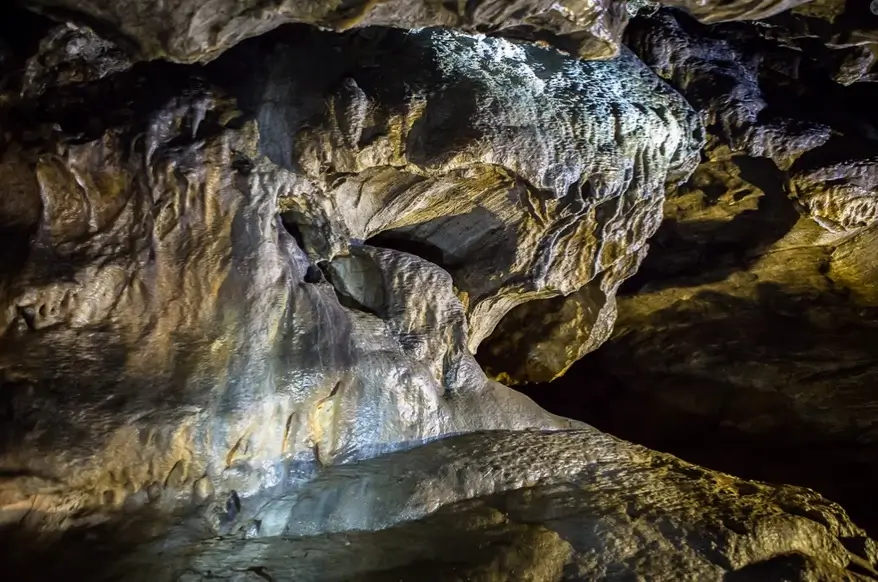
For millions of years – from the Pliocene era (5 to 1.6 million years ago) – this process slowly gnawed into the limestone massif of the mountains, creating an extensive system of corridors, chambers and halls. Stalactites fell from the ceiling, stalagmites grew from the floor, streams of water sculpted decorative drains – karst formations are the result of the unimaginable work of natural forces.
Tourism History – From Stupidity to Rational Management
Discovery and First Centuries of Exploration (18th century)
The existence of Radochowska Cave, also known as <span class="group-hover/language-learning:border-foreground border-subtle cursor-pointer hyphens-auto break-words border-b-2 border-dotted outline-noneReyersdorfer Tropfsteinhole (from the German name), is already mentioned in 18th-century texts. The discovery was not accidental – it was rather a gradual awareness of the local people and guests of Lądek-Zdrój, who during walks in the area came across the cave entrance and looked inside.
Already in those times, tourists came to the well-known spa town of Lądek-Zdrój, looking for additional attractions, strayed from the trails leading to nearby Radochów. They entered the cave, walking in darkness (probably with torches), discovering more and more fragments of this underground world. However, the first visits were limited – tourists were stopped by dense silt (accumulation of various sediments, mud, gravel and clay), which blocked access to the deeper parts of the cave.
Era of Devastation – Lack of Care, Thoughtless Tourism (19th–20th centuries, before 1933)
During the nineteenth century and the first three decades of the 20th century, the cave, although known, remained without systematic care. It was a trivial time for this treasure. Unsupervised tourism led to destruction – many visitors were unaware of the pricelessness of this place. Rock formations, which had formed for thousands of years, were broken, scratched, destroyed unconsciously or deliberately. Graffiti blackened the wall – someone’s names were carved in stone for centuries.
The lack of lighting and safe paths made visits dangerous and random. Tourists got lost, some did not return and had to be rescued. What should have been protected instead fell into the hands of chaos.
Transformation – Heinrich Peregrin and His Vision (1933–1935)
The breakthrough came in 1933, when Heinrich Peregrin, a former miner and resident of Lądek-Zdrój, became interested in the situation. Peregrin was a man with an entrepreneurial spirit and determined by a passion for caves. He saw the potential in this underground wonder of nature and decided to devote his efforts to adapting it for tourism.
In the years 1933–1935, Peregrin rebuilt every day, working constantly:
Cleared the original entrance of rock debris and clay – it was a laborious, dangerous job
Removed silt from other underground corridors – in piles, bucket afterText: with a bucket, removing sediments that had accumulated on the cave floor for centuries
Increased the sightseeing route – thus creating access to new, previously unexplored parts of the cave
Performed adaptation works – adapting the cave for safe tourist traffic
Carved stone steps – to facilitate movement on the steep slopes of underground corridors
Peregrin’s work was both physics and artistic – pure art of rebuilding the underground landscape for the benefit of tourism and education.
Scientific Discovery – 1935, the Year That Changed Everything
During these adaptation works, in 1935, Peregrin made a discovery that exceeded all imagination – he came across bones of animals from hundreds of thousands of years ago. Peregrin, knowing the importance of this find, immediately informed the Zoological Institute of the University of Wrocław.
This discovery attracted the attention of scientists. In 1936, a work by G. Frenzel, a Polish zoologist from the University of Wrocław, was published, describing all the bone remains found. The discovery was stunning – the list of Pleistocene animal species whose remains were found in the sediment was surprisingly long:
Astonishing Pleistocene Fauna – Animals That Inhabit the Cave
Glacial Megafauna – Giants Who Lived Here
The remains found in the cave tell the story of an extraordinary period in the history of Europe – the Pleistocene era, when amazing, now extinct animals inhabited the Sudetes region.
Cave Bear – Tyrant of the Underground
The most wonderful discovery is the skulls of cave bears – huge creatures that were much larger and more massive than today’s brown bears. The cave bear (Ursus spelaeus) was an apex predator of the Pleistocene epoch, sometimes 4 meters long and weighing as much as 500 kg. Not one or two, but many skulls of this animal were found in the Radochowska Cave.
A particularly intriguing discovery – one of the cave bear skulls was, as it turned out, intentionally placed under the wall. It was covered with stones and covered from above with a stone slab – it was not a coincidence! It was a deliberate action. Researchers concluded that this is evidence of a Paleolithic bear cult.
Bear Cult – Rituals of Primitive Man
The bear cult, as it turned out, was a common phenomenon in the old Paleolithic Europe. The animal was considered a deity, a guardian of territories, a symbol of strength and power. Magical rituals were performed with animal remains, their skulls and bones to ensure success in hunting. Even more frightening evidence was found in the Radochowska Cave – a bear skull with filed teeth – which may indicate advancedrituals or medical practices.
Other Extinct Beasts – Cave Lion and Cave Hyena
Alongside cave bears, remains were found (sometimes whole remains scattered on the floor clearly):
Cave Lion (Panthera spelaea) – a predator twice the size of today’s lions from Africa. These were terrible beasts, hunting megafauna.
Cave Hyena (Crocuta spelaea) – clever and cruel, with skulls as large as those of modern lions.
Megaherbivores – Woolly Rhinoceros and Wild Horse
Remains of herbivores were also discovered:
Woolly Rhinoceros (Coelodonta antiquitatis) – a large, hair-covered rhinoceros, adapted to the glacial climate. Modern illustrations indicate that it was an animal resembling today’s rhinoceroses, but with a characteristic “coat” of hair on its back.
Wild Horse (Equus ferus) – the ancestor of today’s domestic horse, but much more bear-like and strong.
Modern Fauna – Testimony of Climate Change
It is fascinating that alongside the remains of extinct megafauna, bones of animals living today were also found (although for some species “today” means the Pleistocene epoch, when the climate was different):
Brown bear – the ancestor of today’s bears
Marten – a predatory mammal
Badger – a digger who has lived here for thousands of years
Hare, roe deer, deer – game animals
European bison – European bison
Cat and wildcat – wild cats
This mixture of fauna shows how dynamic the climate changes were and how natural environments evolved over thousands of years.
<h2
Traces of Paleolithic Man – Cult and Magical Rituals
The most wonderful discovery, however, is the evidence of the presence of Paleolithic man – homo sapiens or perhaps even earlier Neanderthals – in the cave. In addition to animal remains, the following were found:
Quartz and Quartzite Products:
Chipped, sharp pieces of stone – simple tools that primitive man used to process animal meat and hard materials. These stone artifacts, over 20,000 years old, are evidence of intelligence, the ability to plan and adapt to the environment.
Traces of Hearths:
Black spots were found on the bottom of the cave – remnants of fire. Paleolithic man lit fires in the cave – for warmth, to cook meat, to light up the darkness. Each hearth is a testament to nights spent underground, families gathering around the fire, stories whispered in the glow of the flames.
Lack of Human Remains – A Mystery of Deductions:
Interestingly – or rather mysteriously – no human remains have ever been found in the Radochowska Cave, even though so much evidence of his presence has been found. Why? Perhaps this is a deliberate action – perhaps Paleolithic man had a habit of burying his dead in another place, in separate ceremonial graves. Or perhaps the remains simply decomposed over hundreds of thousands of years, and the bones completely burned up or fell into underground streams and were carried outside.
Natural Beauty of the Cave – Flowstone and Karst Formations
In addition to archaeological wonders, the cave is also a natural history museum. Inside you can admire naturally created works of art – mineral formations that were created with water over thousands of years.
Dripstone – An Artist Sculpting in Stone
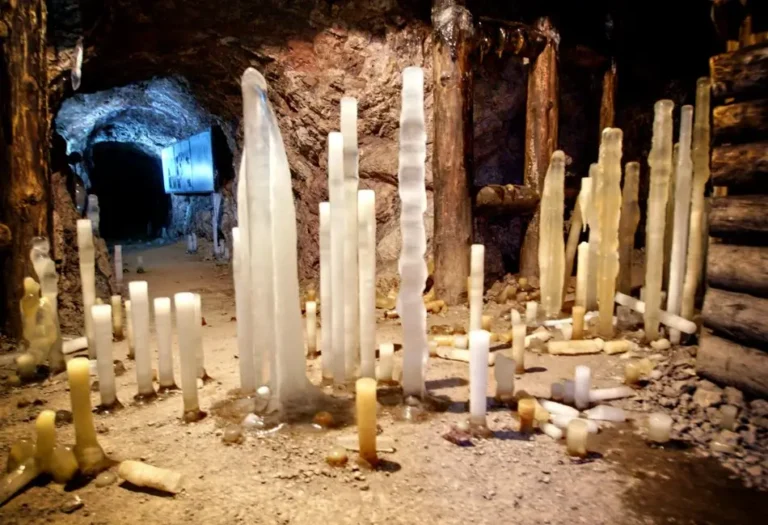
In the central part of the cave, well-preserved dripstones can be observed – a combination of stalactites (hanging from the ceiling) and stalagmites (growing from the floor). Stalactites are formed when water containing dissolved limestone slowly drips from the ceiling. Each drop releases CO₂ and deposits a small portion of calcium. Year after year, age after age – a decorative formation is created, sometimes in colors ranging from white, through yellow, to brown and black (depending on the minerals in the water).
Gothic Hall – The Most Magnificent Chamber
One of the main attractions is the Gothic Hall, where the natural architecture of the cave reaches the apex of beauty. In the Gothic Hall there is a spectacular lake – a miniature underground reservoir, which is inhabited by extremely rare crustaceans called Tatra well shrimp. These microscopic organisms live only in such underground reservoirs – they have evolved in isolation for thousands of years.
The Cave as a Bat Habitat – Contemporary Ecological Function
Today <span class="group-hover/language-learning:border-foreground border-subtle cursor-pointer hyphens-auto break-words border-b-2 border-dotted outline-none transition-colors duration-200 ease-out font-sans text-base font-medium text-foreground selection:bg-super/50 selection:text-foreground dark:selection:bg-super/10
Radochowska Cave] is not only a museum of the past – it is also a living shelter for endangered species.
Four Bat Species – Winter Sanctuary
Bats of four species hibernate in the cave:
Greater Mouse-eared Bat – a massive bat with characteristic black fur
Brown Long-eared Bat – smaller, more delicate
Barbastelle – very rare in Poland
Lesser Horseshoe Bat – the smallest, with a characteristic “shawl” on its face, looks like a tiny alien
The latest bat count (conducted in January under the direction of Dr. Joanna Furmankiewicz from the University of Wrocław) showed 25 individuals, including the aforementioned four species.
Hibernation – A Period of Quiet Expression in Winter
From the beginning of the winter period, the cave is closed to tourists so as not to disturb the hibernation of bats. These agile fliers, when autumn comes, seek shelter in a stable temperature (the cave maintains a constant temperature of approx. 9°C). Just before hibernation, they consume huge amounts of insects (one bat catches up to 600 insects per night) to accumulate fat reserves. Then, in winter, they fall into deep hibernation – metabolism drops dramatically, heart rate drops from hundreds of beats per minute to just a few, they breathe very rarely.
They can hibernate safely in the cave, protected from predators and variable weather conditions outside.
Practical Information – How to Visit the Cave
Seasons and Opening Hours
Tourist Season:
Opening: From April 15 to September 30
Hours: Daily from 10:00 AM to 6:00 PM
Last Entry: Exactly at 5:20 PM
Entries on a Regular Basis: Every 20 minutes, starting at 10:00 AM
<p class="my-2 [&+p]:mt-4
Off-Season:
Visits are possible only after prior arrangement with a guide. Phone reservation is required.
Tour Route – Length and Time
Accessible Route: Approximately 300 meters
Total Length of Corridors: Over 500 meters (most inaccessible to tourists due to danger)
Tour Duration: Approximately 40 minutes
Difficulty: Medium – part of the route requires squeezing through tight gaps
Safety and Equipment
Helmets and Flashlights:
Each tour participant receives a helmet with a built-in headlamp. The cave is completely unlit, so a flashlight is essential. The helmet protects against impacts with inaccessible or low ceilings.
Age of Participants:
Children can participate from a minimum of 3.5 years old. However, descending into the cave may be problematic in practice for infants and very young children.
No Items Allowed:
It is recommended to leave all belongings, bags, backpacks outside the cave. Squeezing through crevices is easier without luggage, and Jasna has several narrow passages where it can be troublesome.
Entrance Fees
Regular Ticket: 45 złotys
Discounted Ticket (students, pensioners, disabled persons): 40 złotys
Groups: Possible discounts for organized groups (prior reservation required)
Guide’s phone number: 604 337 846
Conditions in the Cave
Temperature: Constant, approx. 9°C throughout the year – it’s worth taking a jacket!
Humidity: High – the environment is humid and even cold (despite a direct 9°C).
Lighting: No natural light except at the entrance – you have to rely on a headlamp.
Floor: Uneven, sometimes slippery – comfortable trekking shoes are mandatory.
Radochowska Winery – Wine Tasting After the Blackout Nightmare
On the way to the cave, there is the Radochowska Winery, offering wines from various regions of the world, as well as Lower Silesian local wines. After the adrenaline of an underground adventure and the discovery of the Middle Ages, you can sit down, relax, and taste local wines. This is the perfect place to get used to the sensations and readapt to daylight.
Pavilion in Front of the Cave – Games and Attractions
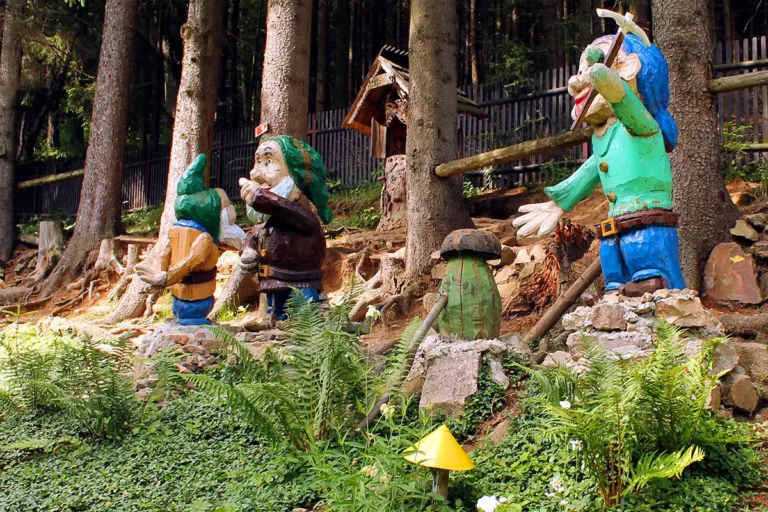
In front of the cave entrance, there is a pavilion with small educational games, such as puzzles. This is a great place for young children to play outdoors before we roll into the underground world.
Why Radochowska Cave is Unique – Summary
Radochowska Cave] is not just a cave – it’s a time-space machine that takes us back 50,000 years to when Paleolithic hunters lit fires in the darkness, when giant bears traversed underground corridors, when humans mastered the first enchantments of magic and ritual. It is a place where geology met archeology, where nature built a palace of stone, and primitive man left his testimony.
Every walk through the cave is a lesson in history, biology, and the inner strength of human imagination. Every step in the dark is a step closer to the secrets of the past. Radochowska Cave is a treasure – a treasure that belongs to everyone who wants to understand where we come from and how our species has traveled through thousands of years of evolution.
If you are looking for a place that will reshape your perspective on the world – the cave is waiting.