Lądek Zdrój is one of the oldest and most fascinating spas not only in Poland, but also in Central Europe. This legendary mountain town, located in the heart of the Kłodzko Valley, attracts thousands of tourists every year from all over the world seeking healing, relaxation and contact with nature. The history of this extraordinary place dates back to medieval times, when the first thermal springs were already actively used for medicinal purposes. Today, Lądek Zdrój is an ideal destination for couples looking for a romantic getaway, for families with children wanting to spend time outdoors, and for solo travelers seeking peace and regeneration.
Legend and History of Lądek Zdrój – From the Middle Ages to the Present
The history of Lądek Zdrój dates back to the 13th century, specifically to 1241, when the first records document the existence of bathing facilities in the area of today’s spa. According to historical sources, thermal waters were already used by local people for medicinal purposes. However, a breakthrough moment for the city occurred in 1282, when the Duke of Wrocław, Henry IV Probus (also known as Probus or the Righteous), granted Lądek city rights. This event made Lądek the sixth city in Silesia with such powers, which in those days was tantamount to obtaining commercial and economic importance.
Henryk IV Probus, who ruled in the years 1270–1290, was one of the most energetic Silesian princes. His decision to grant city rights to Lądek resulted not only from the desire to support local people, but also from the awareness of the extraordinary spa properties that were already known throughout Europe.
In the spring of 1325, as noted in credible historical documents, the first full evidence of the existence of functioning public bath facilities appears, which confirmed Lądek’s status as a developing spa. From that moment, the city constantly increased its reputation as a place of healing, where the sick and weary came to benefit from the healing properties of thermal waters.
Renaissance Period and Spa Expansion (16th–18th centuries)
In the 16th and 17th centuries Lądek Zdrój experienced dynamic development. In 1565, the famous St. John’s Bridge was built, one of the city’s most magnificent monuments, which still attracts tourists with its architecture and history. The bridge was built of broken stone using chicken egg whites as a binder – an innovative solution in those times that turned out to be extremely durable and resistant.
The spa attracted world-famous personalities. According to historical accounts, Johann Wolfgang Goethe, Empress Catherine II, Emperor Alexander I, and later US President John Quincy Adams took baths here. The visit of such figures dramatically raised the prestige of Lądek on the map of European resorts.
The Era of the 20th Century – From Germany to Poland
From 1871, Lądek Zdrój was within the borders of Germany, where it functioned under the name Bad Landeck. For over seventy years, until the end of World War II, the city was one of the most important spa destinations of the German Reich. The Germans invested significant funds in the development of infrastructure, sanatorium buildings and thermal pools, which led to a rapid increase in the number of guests.
The breakthrough came on June 15, 1945, when Lądek Zdrój came under Polish administration. This moment marked a new chapter in the city’s history – the return to Poland and the need to rebuild the entire infrastructure. Despite the difficulties of the post-war period, Lądek Zdrój retained its extraordinary atmosphere and spa potential, which continues to attract visitors from all over the world to this day.
Unusual Attractions of Lądek Zdrój – A Comprehensive Guide
1. Wojciech Spring – The Heart of the Spa and a Masterpiece of Natural Medicine
Wojciech Spring is undoubtedly the proudest attraction of Lądek Zdrój and one of the most beautiful spa facilities in Poland. This historic natural medicine facility was built in 1678 as the so-called “New Facility”, and its construction was designed as a model of a Turkish bath in Pest, which makes it architecturally unique.
The main attraction of Wojciech Spring is the beautiful round thermal pool – an architectural pearl whose deadly white marble contrasts with the crystal water. The pool is filled daily with fresh thermal water with a temperature reaching up to 45 degrees Celsius, which makes itideal place to regenerate the body.
Treatments available at Zdroj Wojciech:
-
Mineral baths in medicinal sulfide-fluoride waters
-
Pearl baths – an extraordinary experience of bubbles massaging the whole body
-
Sprays and hydration treatments
-
Underwater massages – combining relaxation with therapy
-
Hydromassages – intensive treatment for muscles and joints
-
Whirlpool baths for limbs
-
Mud treatments – wraps, “fasons” and baths in medicinal mud
The Mineral Water Pump Room on the first floor of the building offers an unforgettable experience of tasting authentic Lądek waters. Two mineral springs are available:
-
“Zdzisław” Water – rich in minerals, with properties that support the body’s detoxification process
-
“Maria Skłodowska-Curie” Water – water named after the famous scientist, containing special properties that – as traditionally believed – prolong youth and improve skin appearance
According to spa tradition, mineral waters from Lądek Zdrój lower cholesterol levels, flush out heavy metals and accelerate bone healing, making them an ideal option for the elderly and convalescents.
Practical information:
-
Address: Plac Mariański 13, Lądek-Zdrój
-
Opening hours: Every day from 8:00 a.m. to 6:00 p.m. (until 8:00 p.m. in season)
-
Tickets: One- and multi-day packages available
-
Reservation: Booking visits is recommended on peak days (weekends, school breaks)
2. Covered Bridge – Poland’s Only Architectural Wonder
The covered bridge in Lądek Zdrój is absolutely unique not only in Poland, but also a rarity on the map of the entire world. It is the only such bridge in Poland, built at the beginning of the 20th century (specifically in 1905) by engineer Felix Henry.
History of the bridge’s construction:
The bridge was built to connect two sanatorium buildings separated by the river Biała Lądecka. The idea was brilliant: to allow spa guests to move freely between two historic sanatoriums without having to go outside in bad weather. This architectural solution was extremely innovative for a time when health resorts focused on the comfort of their patients.
Unfortunately, the bridge is now walled off from the side of the former treatment building and tourists cannot walk across it. Nevertheless, the bridge remains a fascinating photograph and a symbol of the history of Lądek Zdrój, visible from many parts of the town.
Where to find it: The bridge is located in the town center, right next to the main building of the Wojciech Spa – it is easiest to spot it while walking through Mariański Square or Zdrojowa Street.
3. St. John’s Bridge – A Medieval Masterpiece with a Baroque Figure
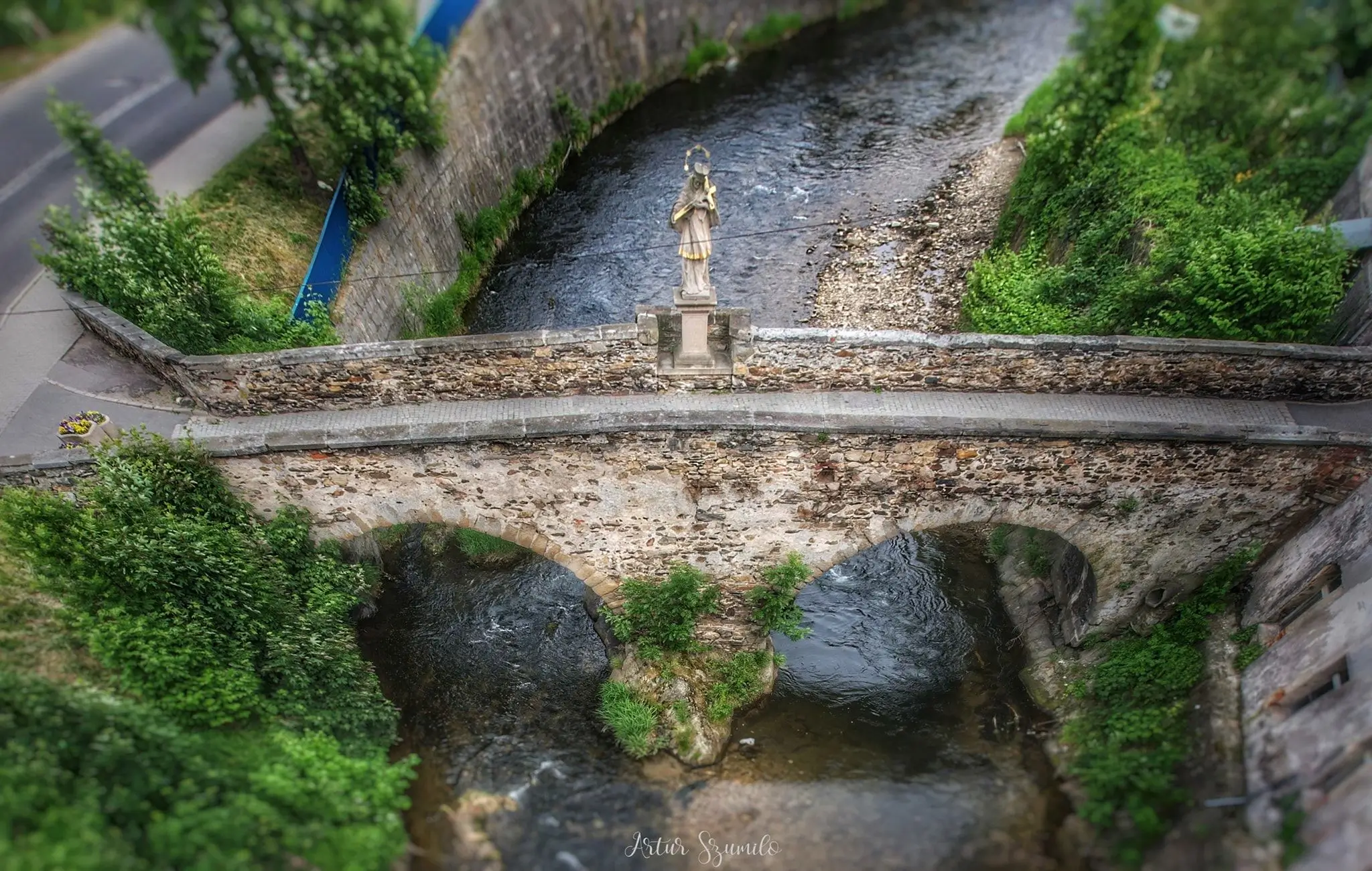
St. John’s Bridge is one of the oldest and most historic bridges in Silesia. Built in 1565, the bridge is made of broken stone and is a well-preserved example of medieval engineering.
What makes this bridge special:
-
Using Chicken Eggs as a Binder: During construction, chicken eggs were used instead of traditional lime as a binder. This innovative solution proved to be phenomenally durable – the bridge survived all the floods, including the catastrophic flood of 1997, while many modern bridges were destroyed.
-
Baroque Figure of St. John of Nepomuk: On the balustrade of the bridge is a beautiful stone sculpture of St. John of Nepomuk from 1709. It is a copy of the famous statue from the Charles Bridge in Prague and – most importantly – the oldest sculpture of Nepomuk in the entire Silesia.
-
Legend of Protection: According to legend, the figure of St. John of Nepomuk protects the bridge from great waters. It is said that St. John of Nepomuk – the patron saint of bridges and drowning people – especially cares for this bridge, hence its extraordinary resistance to flood threats.
-
Historical Status: The bridge has been entered into the register of monuments since 1971, which emphasizes its importance to the cultural heritage of Lower Silesia.
Where to find it:
St. John’s Bridge is located over the Biała Lądecka river, in the center of town, near Mariański Square and the Market Square. A walk to the bridge is an ideal way to learn about the history of Lądek during your stay at the spa.
4. Lądek Arboretum – The Highest Arboretum in Poland
The Lądek Arboretum is one of the least known, yet most valuable natural treasures in the Kłodzko Land. Located in the area of the Golden Mountains, at an altitude of approximately 500 meters above sea level, it is the highest arboretum in Poland.
History of creation:
The Arboretum was created at the end of the town, in the innocent valley of the Jadwiżanka stream, as a result of the work of several generations of botany and nature enthusiasts. The rich collection of trees and shrubs – both coniferous and deciduous – includes some of the most valuable specimens of European flora.
Main attractions of the Arboretum:
-
Monumental Century-Old Trees: The Arboretum is home to ancient specimens of trees that are several hundred years old:
-
Monumental Oaks – majestic, with huge trunk circumferences
-
Century-Old Beeches – impressive in terms of height and crown expanse
-
Old Pines – looking like guardians of time
-
Giant Firs – forming a natural canopy over the paths
-
-
Jadwiga’s Spring: A little further behind the main Arboretum is the romantic Jadwiga’s Spring, where a natural well is filled with crystalline water from the Jadwiżanka stream.
Practical Information:
-
Opening Season: May – end of October
-
Opening Days: All days of the week EXCEPT Mondays
-
Hours: 10:00 AM – 6:00 PM
-
Access: There is no car road to the Arboretum itself. You should walk along Moniuszki Street, next to the Biskupie Ponds
-
Walking Distance: About 15-20 minutes walk from the city center
-
Entrance Fee: A symbolic fee for the maintenance of the area
Advice for tourists: The Arboretum is an ideal place for people looking for silence, nature and meditation. Plan at least 1-2 hours for a walk around the area, due to its location in the mountains.
5. Zdrojowy Park – An Oasis of Peace in the Heart of the City
Zdrojowy Park is one of the most representative and charming places in Lądek Zdrój. This beautifully composed garden with a European character is a natural extension of the Zdrój Wojciech area and is an ideal place for health-promoting walks.
What to see in Zdrojowy Park:
-
Views of Zdrój Wojciech – from various points in the park there is a beautiful view of the historic Zdrój building
-
Mineral water pump rooms – pavilions located in the park, where you can taste natural medicinal waters
-
Benches and gazebos – ideal places to relax and watch birds
-
Walking trails – marked paths leading into the park
6. Market Square and Town Hall – Historical Center of Lądek Zdrój
The Market Square in Lądek Zdrój is a magical place that has retained the character of a medieval spa town. Beautiful, colorful tenement houses surrounding the market square create an authentic atmosphere from centuries ago.
Main objects on the Market Square:
Town Hall with Clock Tower: The building dates from the late 19th century and is the dominant structure of the market square. From the town hall tower, the Lądek bugle call rings out every day at 12:00 – a traditional wind signal that can be heard from many points in the city.
Holy Trinity Column: A beautiful baroque column forming the center of the market square, a work of sacred art from the 18th century.
Market Townhouses: Historic merchant houses surrounding the square, some of which offer private accommodation for tourists.
Additional Attractions Worth Noting Around Lądek Zdrój
Radochowska Cave
Located a few kilometers from Lądek Zdrój, Radochowska Cave is one of the most interesting places to visit in this part of the Kłodzko Land. It was formed in the Pliocene epoch (1.6–5 million years ago) and was discovered in the 18th century. Cave tours are conducted with guides and are an unforgettable experience for lovers of geology and adventure travel.
Sanctuary of Our Lady on Mount Igliczna
Gora Igliczna has been a destination for pilgrimages and excursions for centuries. At the top is a copy of the miraculous statue of Our Lady of the Snows brought from Maria Zell in Austria – a place of worship and contemplation for believing tourists.
Hot Thermal Springs
In the vicinity of Lądek Zdrój you can find many natural hot thermal springs that are ideal for bathing in pure nature.
Practical Information for Tourists
How to get to Lądek Zdrój?
-
By car: From Wrocław about 2.5 hours (approx. 180 km); from Warsaw about 4.5 hours
-
By train: Direct connections with Wrocław and other major cities (every 1-2 hours)
-
By bus: Numerous routes from large cities in Lower Silesia
Best Time to Visit
-
Summer season (June–September) – warm weather, full tourist offer
-
Spring and autumn – fewer crowds, beautiful landscapes, ideal for trekking
-
Winter – ski slopes nearby, karst landscapes
Where to Stay?
Lądek Zdrój offers a wide range of accommodation:
-
Spa hotels: From 3 to 5 stars
-
Guesthouses: Family-run, cozy facilities
-
Private accommodation: Economical options for people on a smaller budget
-
Apartments: Ideal for families or groups of friends
Where to Eat?
Lądek Zdrój has a rich restaurant offer:
-
Classic Silesian cuisine: Silesian dumplings, żurek (sour rye soup), bigos (hunter’s stew)
-
International cuisine: Italian, French, Asian
-
Cafes and bakeries: Homemade cakes and sweets
-
Diet restaurants: Specializing in cuisine for spa guests
Lądek Zdrój – Seasonal Events and Festivals
Lądek Zdrój attracts not only health tourists, but also artists, scientists, and culture enthusiasts. The following events are regularly held in the city:
-
Andrzej Zawada Mountain Film Review – the largest and oldest festival of its kind in Poland
-
Lądek Ballet Summer – a dance festival attracting dancers from all over Europe
-
Classical Music Concerts – organized in the historic halls of the Wojciech Spa
-
Art Exhibitions – presenting works by artists from Lower Silesia and the surrounding area
Why is Lądek Zdrój a Unique Destination?
Lądek Zdrój is more than just a spa town. It is a place where history meets nature, where medieval tradition coexists with modern medical technologies. Every visitor to the city discovers their own reason to return here years after year.
Whether it’s the therapeutic baths in mineral-rich waters, romantic walks across historic bridges, or contemplation in the quiet Arboretum – Lądek Zdrój offers something unique to everyone. It is a place where you can regenerate both body and soul, and the memories of your stay last long after you return home.