In the heart of the Kłodzko Land, away from the hustle and bustle of the most popular resorts and trails, there lies a forgotten giant. Gorzanów – a medieval stronghold, which turned into one of the greatest palatial residences in Silesia, is a story of power, fall and heroic rebirth. This is not a monument that can be visited in half an hour. It is a monumental complex that absorbs, fascinates and forces you to reflect on the variability of fate. Doomed to oblivion and ruin for decades, today, thanks to passion and titanic work, it is slowly regaining its former splendor, becoming a true, unknown pearl of the region.
As the hosts of “Gołąbek”, guardians of local histories, we feel obliged to tell you this extraordinary story. We have created a guide that is both a tribute to Gorzanów’s past and a map for the modern explorer. We will discover its turbulent history, we will look behind the walls of the monumental castle class=”ng-star-inserted”>, we will mark trails to neighboring castles and prove that this is one of the most worth visiting, although still underestimated places in Lower Silesia.
History Carved in Stone: From Medieval Stronghold to Baroque Power
To understand the monumentality of today’s palace, we must go back to its roots, to the times when it was a raw stone fortress.
The von Ratschin Family and the Origins of the Fortress
The history of settlement in this place dates back to the deep Middle Ages. The first documented stronghold, a real defensive defensive castle, was probably built here in the 14th century. She belonged to the powerful von Ratschin family in the Kłodzko region. It was a typical building of those times, the main purpose of which was to defend the strategic trade route running along the Nysa Kłodzka valley. The remains of this Gothic building are still hidden in the basements and foundations of today’s palace.
The Thirty Years’ War and the Coming of the Herbersteins
The real breakthrough in the history of Gorzanów (then Grafenort) occurred in the 17th century. During the devastating Thirty Years’ War, in 1628, these properties were purchased by Count Johann von Herberstein, one of the most powerful and richest aristocrats of the Habsburg Empire. He had the ambition to create a residence worthy of its status that would outshine everything else in the area.
Golden Age: The Rise of the Monumental Palace
In the mid-17th century, on the site of a partially demolished and outdated medieval stronghold, the Herbersteins began building a gigantic, early Baroque palace. The project, inspired by Italian architecture, was implemented on a grand scale. A four-winged residence was built with an internal courtyard, surrounded by fortifications, a wonderful landscape park, farm buildings and even a separate theater wing. For over two centuries, the palace in Gorzanów was a vibrant cultural and social center, hosting the most distinguished families of Europe.
Decades of Darkness: Collapse and Devastation after 1945
After World War II and the incorporation of the Kłodzko Land into Poland, the last descendants of the von Herberstein family had to leave the palace. The residence began the darkest period in its history. Taken over by the state, deprived of care and systematically robbed of its most valuable furnishings, it fell into increasing ruin. For decades it was used as a warehouse and social housing, which brought it to the brink of complete destruction.
Castle That Rise from the Ruins: Tour of the Monumental Complex
What we can see in Gorzanów today is a miracle and the result of titanic work. In 2012, the ruined complex was bought by the Gorzanów Palace Foundation, which started a heroic fight to save it.
Architectural Masterpiece: The Structure of the Palace and Its Interior
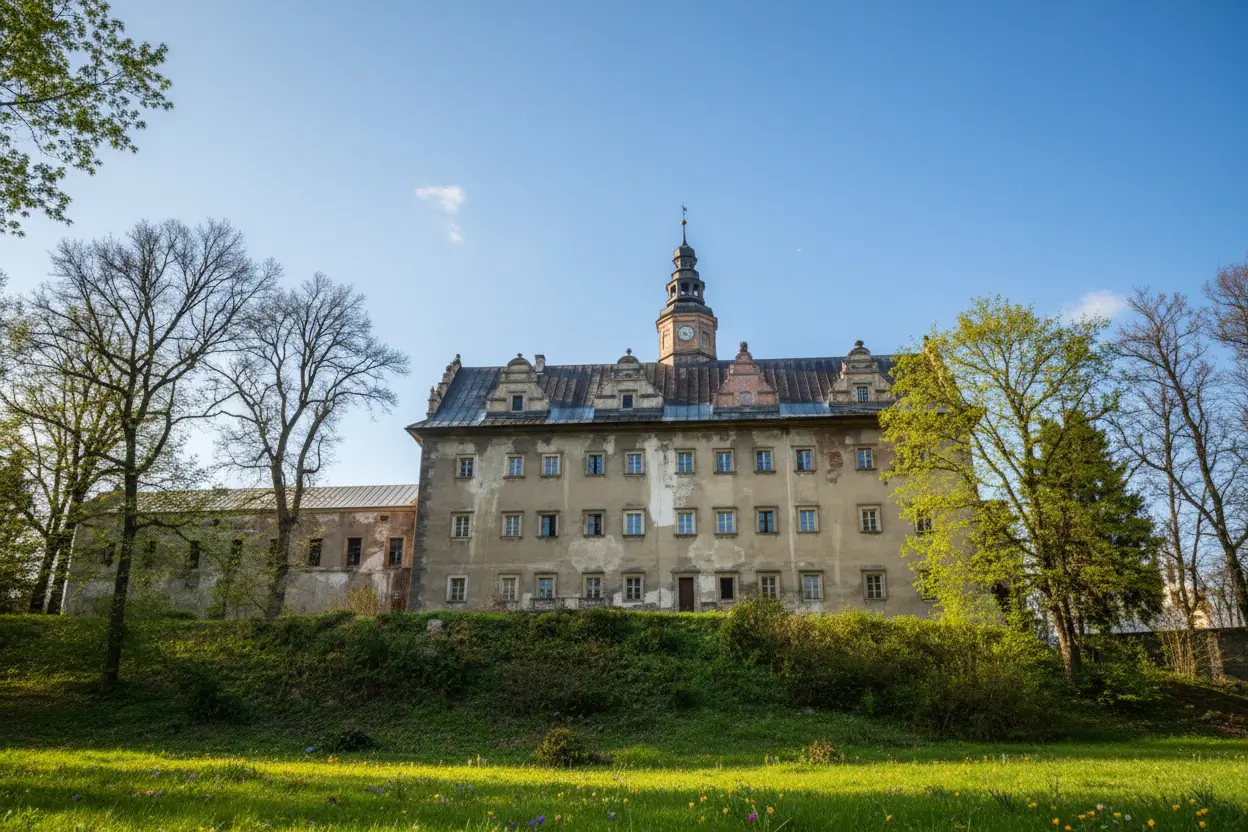
The Palace in Gorzanów is one of the largest facilities of this type in Lower Silesia. Its huge, four-winged shape with a gate tower and an internal courtyard makes a huge impression. The most representative is the southern facade, overlooking the park. Although the interiors still show signs of damage, fragments of rich stucco decorations, polychromes and ornaments have been preserved. Visiting the palace is a journey back in time – you can see here both traces of its former glory and dramatic testimonies of devastation, and most importantly – the progress of impressive renovation works.
Trails to Neighboring Towns: Gorzanów as a Base Camp
Gorzanów’s location makes it a great starting point for discovering other historical places in the area.
-
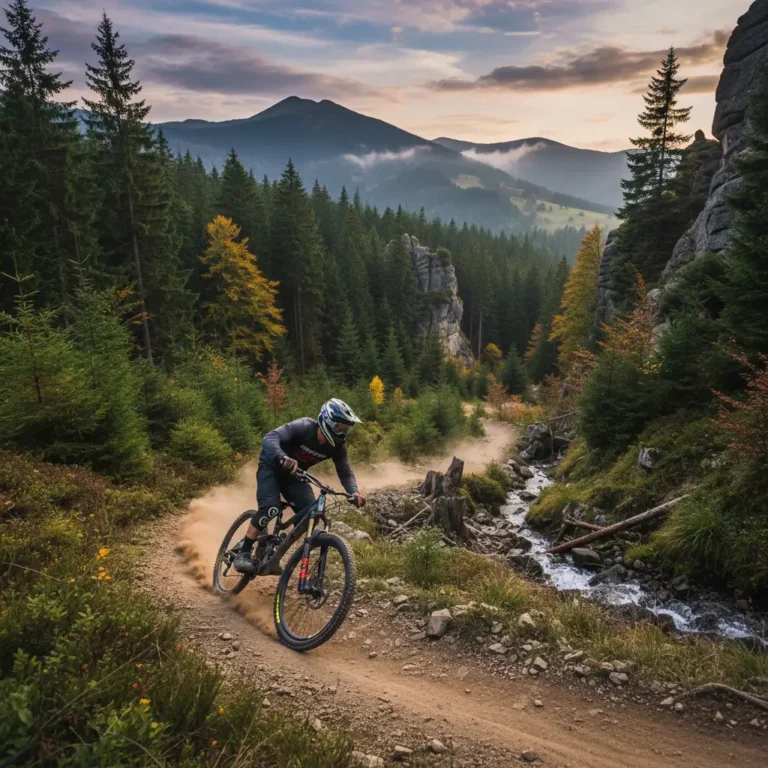
To Bystrzyca Kłodzka: Just a few kilometers separate Gorzanów from one of the best-preserved medieval towns in the Kłodzko Land. You can get there via picturesque local roads (ideal for cycling) or marked hiking trails to visit the perfectly preserved defensive walls, the Water Gate and the unique market square.
-
To the ruins of Szczerba Castle: For lovers of real medieval strongholds, a trip to the ruins of Szczerba Castle (approx. 15 km to the south) is a must. There are forest tourist trails there, and the stronghold itself, picturesquely situated on a rocky hill, offers an unforgettable atmosphere and beautiful views.
“Gołąbek” – Discover the Two Worlds of the Kłodzko Valley
Gorzanów and its surroundings are a world of historic lowlands, full of palaces, castles and charming towns. To fully appreciate the richness of the Kłodzko Land, it is worth confronting it with the world of wild, high mountains. “Gołąbek” in Stronie Śląskie, located in the heart of the Śnieżnik Massif, offers just such an opportunity. After a day spent discovering the secrets of the Herberstein Palace, returning to the silence and majesty of the mountain landscape allows you to rest and regain your strength. Our facility is a gateway to another, equally fascinating face of the region, which makes it an ideal base for comprehensive exploration of the entire Kłodzko Valley.